In our recent broadcast Predicting the Unpredictable: All About Environmental Monitoring, the team at PAL Aerospace’s IES (Integrated Environmental Services) Group discussed the tools, training, and thinking that define their operations, as well as how they leveraged them to find a missing yacht in the middle of the North Atlantic Ocean. While compelling on its own, the yacht recovery mission is just one of many examples which underscore how PAL Aerospace’s fusion of weather forecasting, oceanography, and remote sensing supports safer, more informed offshore operations.
A Missing Yacht – The Search Which Proved the System
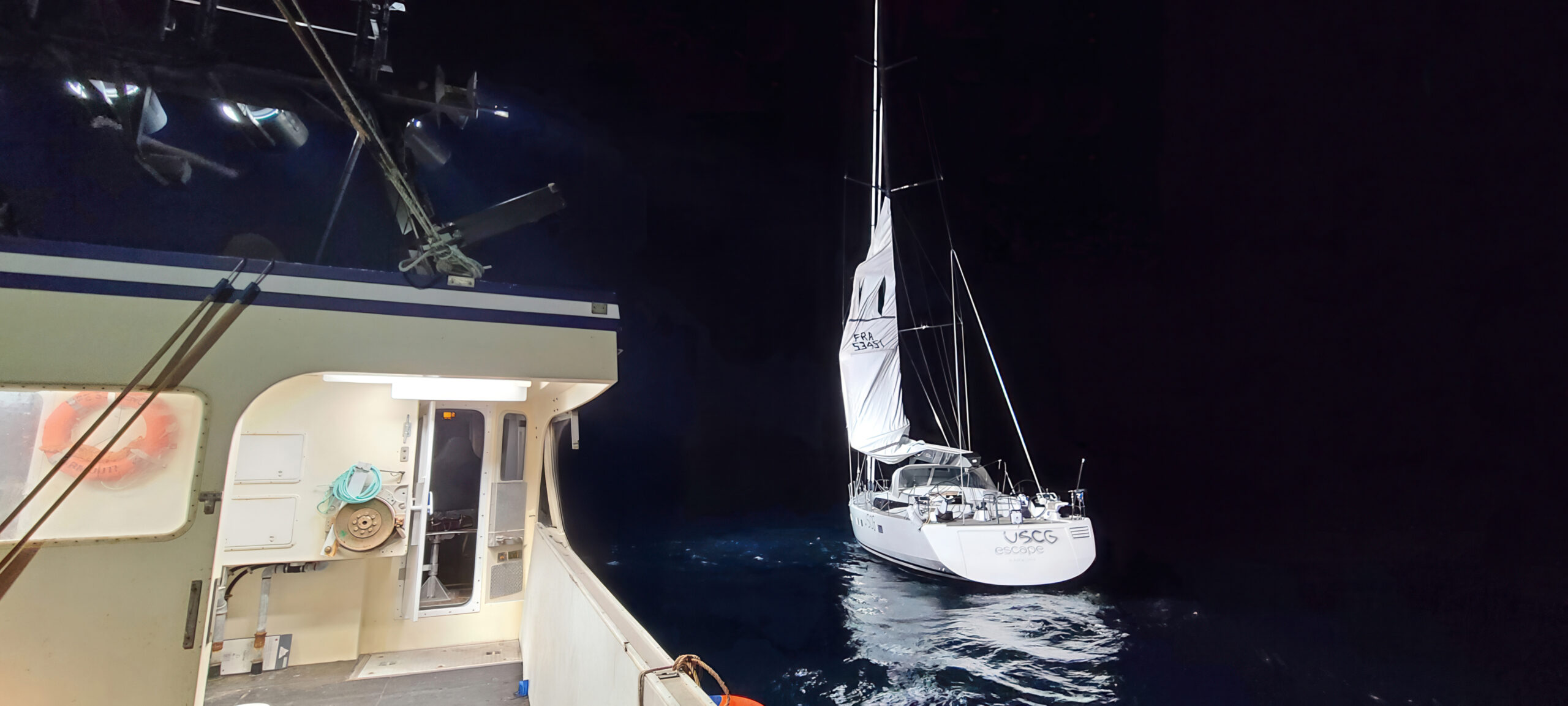
In the summer of 2022, a German couple sailing from Bermuda to Nova Scotia encountered a violent North Atlantic storm. Both were critically injured while attempting to reef the sails, and although the U.S. Coast Guard airlifted them to safety, they tragically succumbed to their injuries. Their 66-foot yacht, now a ghost ship holding cherished family possessions, was left adrift. After three days of fruitless searching, the family turned to PAL Aerospace for help.
With time slipping away and hundreds of miles of open ocean to cover, PAL Aerospace mobilized its IES team and airborne surveillance division. Known for its sophisticated iceberg modeling and ice monitoring work, the IES team adapted its existing toolkit to the challenge. “We applied the Canadian Ice Service drift model; it’s essentially our iceberg drift model flipped upside down to behave like a sailboat,” explains Ryan Crawford, Offshore Lead with the IES group.
Using the yacht’s last known coordinates, the team built a custom drift simulation. Crawford and his colleagues factored in prevailing wind, ocean currents, and sea state, making educated assumptions (e.g., the sails being down) to model the yacht’s likely path. Within hours, they defined a tight target area and passed it to the search vessel and PAL Aerospace’s aerial crew.
That very evening, the yacht was located. “Lo and behold, they did find the Projected Drift Track Model boat about five nautical miles away from the actual modeled position, which was great,” says Crawford. “A piece of our ice modeling software…was used to find this vessel. It was quite the intriguing experience.” The success was more than a proof of concept; it was a rescue guided by science.
The rescue may also have averted further disaster. When the recovery team boarded the vessel, they noted large commercial ships passing within a mile. A collision was a real risk.
The success of the operation highlighted how PAL Aerospace’s modeling capabilities translate environmental data into real-world outcomes. As PAL Aerospace’s Director of R&D Stephen Green noted, “Accurate data turned into actionable intelligence” is what ensures assets arrive where and when they are needed most.
Satellite surveillance further sharpened the effort. The IES team leveraged Earth observation platforms such as Sentinel-1 radar, Sentinel-2 optical, and Canada’s RADARSAT Constellation to identify features and narrow the search area. “We didn’t want to just blindly run around looking for icebergs, or in this case, a yacht,” Crawford notes. “We use it in-house to make our flight operations a lot more fruitful and hopefully save our clients a little bit of money.” By combining satellite imagery, aircraft patrols, and precision modeling, PAL Aerospace delivered an integrated solution—faster, smarter, and safer.

Full Spectrum Environmental Monitoring Capabilities
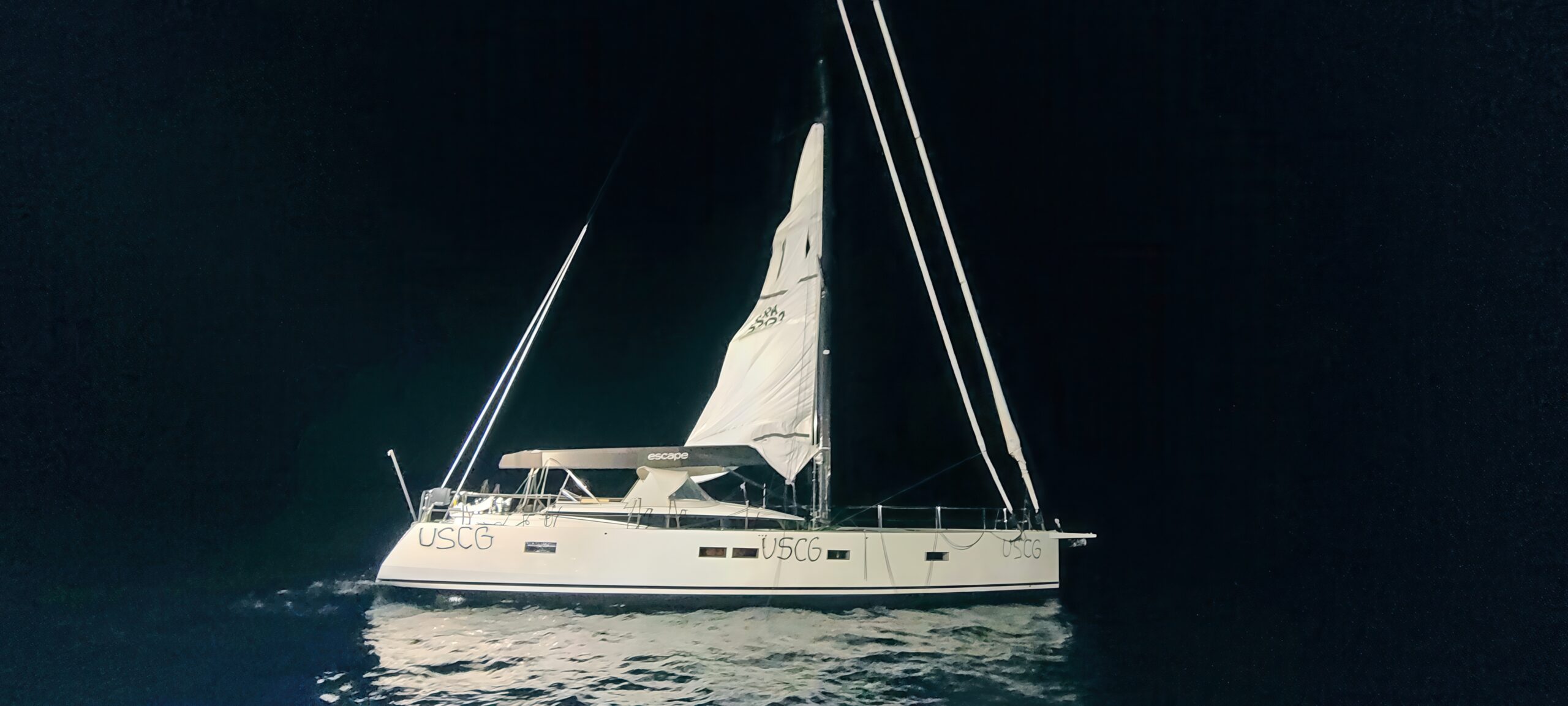
The missing yacht saga dramatically showcased how PAL Aerospace’s many environmental monitoring tools come together. No doubt this was a dramatic example, but the task fit neatly into the unique expertise of PAL Aerospace’s staff.
On any given day, the IES team is concurrently tracking Arctic icebergs, forecasting North Atlantic weather, mapping ocean currents, training offshore crews in weather observations, and watching for seabirds and whales around oil platforms.
This full suite of capabilities is what makes PAL Aerospace a trusted partner for offshore industries and government regulators alike. Below, PAL Aerospace’s key services are highlighted, along with a description of how each provides operational and business value.
Ice Monitoring & Drift Modeling
Ice surveillance has long been the bedrock of PAL Aerospace’s Integrated Environmental Services. Whether monitoring seasonal ice off Newfoundland or predicting long-range drift patterns for Arctic-bound operations, the goal is consistent: Deliver actionable ice intelligence to offshore clients with precision and speed.
To achieve this, PAL Aerospace leverages two sophisticated drift models—the Canadian Ice Service (CIS) model and the National Research Council (NRC) iceberg drift model. These models run daily during ice season, typically requiring around one hour to execute and an additional thirty minutes for processing, ensuring timely delivery of accurate forecasts.
Input data is drawn from a rich ecosystem of sources integrated through PAL Aerospace’s proprietary Ice Data Network System (IDNS). This platform merges data from aircraft reconnaissance flights, vessel observations, satellite imagery, and radar feeds. Satellite sources include Sentinel-1 SAR (20 m resolution), Sentinel-2 optical (10 m resolution), and Canada’s RADARSAT Constellation Mission (RCM) offering ~50 m resolution with roughly two revisits per day. From collection to usable product, satellite data is typically processed and available within 2 – 2½ hours, ensuring near-real-time situational awareness.
Ice detection and tracking are conducted using a combination of SAR and optical imagery, enhanced by in-house modeling and real-time environmental data such as wind, wave, and current measurements from local buoys. These parameters are assimilated into the drift models to improve accuracy.
PAL Aerospace supports operators with a suite of ice management tools, including predictive mapping, tow/crop-wash decision support, and rapid hazard updates. Observational data—including METAR and MAMR reports submitted from offshore platforms—are also incorporated into the IDNS system and undergo quality assurance checks by PAL Aerospace analysts.
A clear demonstration of PAL Aerospace’s modelling precision occurred during the yacht-recovery mission when the IES team applied the CIS model to simulate the vessel’s drift path which was accurate within five nautical miles. It is no stretch to imagine similar modeling being applied to a drifting oil spill or search-and-rescue objects, turning “what if” scenarios into actionable probabilities.
24/7 Weather Forecasting & Oceanography
In 2025, PAL Aerospace took a major strategic step by fully internalizing weather forecasting and oceanography under its IES umbrella. This newly consolidated team brings together professional meteorologists, oceanographers, engineers, and developers with more than thirty-five years of combined experience, much of it gained through the integration of Oceans Ltd., a recognized leader in metocean expertise.
“Our weather office is staffed 24/7, 365 days by professional meteorologists, with in-house specialized forecasting software to provide site-specific short-range and long-range marine weather forecasts,” says Shanshan Liu who leads the Weather & Oceanography group (and formerly was the Managing Director of Oceans Ltd.).
Unlike generic model outputs, PAL Aerospace’s forecasts are refined using advanced atmospheric modeling, radar, and satellite imagery, as well as expert meteorologist interpretation. The result is more accurate and operationally relevant forecasts for offshore decisionmakers, covering everything from helicopter route planning and vessel motion predictions to storm tracking and crane-lift scheduling.
Complementing this are PAL Aerospace’s expanded oceanographic services, which now include the deployment and operation of:
- Wave buoys
- Acoustic Doppler Current Profilers (ADCPs)
- Conductivity, Temperature, and Depth (CTD) sensors
- Acoustic releases and water-level instruments
- Precipitation, barometric pressure and wind sensors
These instruments support detailed environmental baselining, compliance monitoring, and emergency response. “The integration creates a synergy that amplifies our strength for a greater scope of environmental solutions,” says Liu.
Importantly, the metocean team’s work directly impacts operational safety, environmental protection, and scheduling efficiency. Whether enabling crews to avoid a storm, plan a safe offshore lift, or respond to a pollutant release, PAL Aerospace’s forecasts and models help operators act with clarity and confidence. In a clear signal of growing demand and operational trust, the team has already delivered thousands of tailored weather and fire forecasts for offshore clients.

Wildlife & Seabird Observation
The offshore energy sector does not operate strictly in a physical environment of water and weather; it also operates in a living environment teeming with wildlife.
Protecting marine mammals, sea turtles, and seabirds is not just an ethical responsibility, but is also often a legal requirement for maintaining operating licenses. PAL Aerospace’s IES team has long provided wildlife monitoring services to aid clients in meeting these obligations. “We’ve pretty much always been doing some form of wildlife monitoring. It’s always been an important part of any offshore program,” says Jonathan Chatman, Manager of Operations for IES.
In practice, this means PAL Aerospace supplies trained wildlife observers on rigs and vessels to watch for marine mammals (whales, dolphins, seals) and flocks of seabirds, especially during sensitive operations—e.g., seismic surveys, drilling / construction, or work near known breeding, migration, or feeding zones.
To minimize impact on wildlife, the team adheres to strict protocols set by regulators such as the Canada-Newfoundland and Labrador Offshore Petroleum Board (CNLOPB), now Canada-Newfoundland and Labrador Offshore Energy Regulator (CNLOER). In practice, observers conduct systematic scans multiple times a day, logging any sightings of at-risk species and ensuring that proper mitigation measures—e.g., suspending activity if a whale comes too close—are taken.
“You need to make sure that you are having as little impact on the wildlife or the environment around you as possible,” Chatman emphasizes. PAL Aerospace not only follows that rule, but has also helped raised the bar on data quality and reporting. This has been accomplished by engaging seabird and marine mammal experts to refine monitoring procedures that ultimately surpass compliance standards.
A key component has been embracing new technology. One innovative tool PAL Aerospace uses is passive acoustic monitoring for whales. In the often foggy, dark waters offshore, inability to see a whale certainly does not mean one is not there.
PAL Aerospace has invested in training its observers in the UK on the PAMGuard system which uses underwater hydrophones to listen for whale calls and detect their presence even when out of sight. “We’ve sent several of our observers…to a company called Seiche, who train for a piece of equipment called PAMGuard,” notes Chatman.
The intensive week-long course covers marine mammal biology, acoustic technology, and hands-on offshore deployment. The payoff is an extra set of “ears” underwater to ensure operations pause when, for instance, a North Atlantic right whale is nearby. This helps prevent harm to an endangered species and reduces the risk of a costly shutdown by regulators.
PAL Aerospace’s wildlife monitoring also extends to seabird surveys. Following the Canadian Wildlife Service’s Eastern Canada Seabirds at Sea (ECSAS) protocol, observers log bird counts and species. This contributes to a massive dataset which is of tremendous aid to understanding and mitigation of industry impacts. All of these efforts give offshore operators confidence that they can meet strict environmental regulations and be good stewards of the ocean.
For stakeholders such as regulators and ESG advisors, these efforts demonstrate that PAL Aerospace’s clients are operating responsibly and transparently. In sum, the wildlife and habitat observation program is focused on keeping both industry and wildlife safe, delivering a win-win for sustainable oceans.

Training & Data Quality (METAR / MANMAR)
Even the best sensors and models are only as good as the data feeding them. Part of PAL’s IES offerings, albeit perhaps underappreciated, is training and standardization for the people collecting field data.
Take weather observations on offshore platforms… Many rigs have personnel reporting conditions—e.g., wind, visibility, and cloud cover—in standard code formats: Meteorological Aerodrome Report (METAR) for aviation weather, and Maritime Meteorological Report (MANMAR) for marine weather. PAL Aerospace actively trains offshore crews in these observation practices.
“We do a nice bit of training actually,” says Kelsey McCarthy, one of PAL Aerospace’s onshore leads. “We instruct METAR and MANMAR courses—they’re definitely the most popular. They’re about a week each. We have people from different offshore companies come in and we give them instruction on how to record METAR and MANMAR coding.”
By teaching rig personnel to accurately log weather data and encode it correctly, PAL Aerospace helps ensure that vital information, e.g., a sudden drop in visibility or rising winds, is captured and fed into decision-making systems.
In fact, PAL Aerospace has a custom system called IDNS that offshore crews use to input their weather strings, which then transmit back to PAL Aerospace’s onshore Ice Centre in St. John’s. There, a team of data analysts quality-check each report in near real-time. This check ensures that the data “makes sense” and that coding errors are corrected promptly. “If they don’t [code it right], we’ll send an email and usually it gets rectified that day,” McCarthy explains of the tight feedback loop.
PAL Aerospace’s quest for data accuracy may seem like minutiae, but it directly ties to safety. For instance, helicopter pilots rely on those rig reports before attempting a landing offshore. “We make sure all the individuals offshore are trained for that,” adds Chatman. Accurate observations become “another decision-making tool that the helicopter providers need” to ensure safe flights.
Furthermore, PAL Aerospace aggregates and standardizes all the data (weather, ice, wildlife, etc.) into regulator-ready formats. They compile quarterly reports and performance metrics required by agencies such as Transport Canada and the Offshore Petroleum Board. By doing so, they remove a huge compliance burden from the operators and provide a single source of truth for all environmental data.
PAL Aerospace’s commitment to data integrity and training builds confidence with regulators and reduces the risk of non-compliance penalties for clients. It also means that when a crisis strikes, the data coming in (from observers, sensors, satellites, etc.) is trusted and actionable.
Real-Time Data Integration & Delivery
The final piece of PAL Aerospace’s approach is perhaps the most critical—the integration of all these streams into timely, actionable intelligence. PAL Aerospace’s IES prides itself on being a one-stop data-fusion hub for offshore environmental information.
In St. John’s, the co-located Operations Ice Centre and Data Analysis Team act as the nerve center. They receive inputs from every source: satellite imagery downloads, observer reports via email, radar shapefiles, ocean buoy feeds, forecast models, and more. Every day, an enormous volume of data flows in, and the team filters, verifies, and synthesizes it into usable updates for clients.
“We have so much data run through us in a day or in a year that we’ve really blown some of our clients away with the amount of information they rely on us for,” says Chatman. In fact, one client was astonished at how the PAL Aerospace team could process so many different decision-making tools and deliver them within a single day.
PAL Aerospace’s data handling and processing is enabled by robust processes and a culture of responsiveness. The IES team adheres to strict KPIs (Key Performance Indicators). As an example, after any ice reconnaissance flight, a fully analyzed report with maps is sent out within four hours of the plane landing. Meeting such timelines requires tight coordination; analysts prioritize critical information (e.g., an iceberg spotted near a platform) to ensure that it is disseminated immediately, sometimes even before the plane has finished taxiing.
Multiple analysts collaborate to share the load, and an on-call schedule ensures 24/7 coverage during emergencies. “We are very much… an emergency response team at the end of the day,” Chatman notes, meaning that when a client faces a potential crisis (iceberg collision, extreme weather, spill, etc.), the IES division swings into action with the urgency of first responders.
New analysts undergo up to three years of training and mentoring before they are deemed fully autonomous to handle data and make calls on their own. This is a direct reflection of how high the stakes are and how seriously PAL Aerospace takes quality control. McCarthy adds, “There are many hands that go into the quality assessment of all the data that goes through here.”
The output of this intensive process is delivered to clients in whatever format suits them best. Some prefer a secure web portal where they can log in and visualize up-to-the-minute data layers (weather, ice charts, wildlife sightings) on interactive maps. Others prefer email briefings or even a quick phone call for urgent issues. PAL Aerospace accommodates all these needs, recognizing that information is only useful if it reaches the right people at the right time in the right way.
Jonathan Chatman sums up why integration is paramount. Ice management, for instance, cannot be done without knowing the weather forecast and ocean state. “We can identify where the targets (icebergs) are, but we can’t do any of our modeling or predictions without having good forecasts and oceanographic information feeding into our models,” he says. It is the combination of this data—fused and delivered as a coherent picture—which gives decision makers true situational awareness.

Predictive Intelligence at Sea: What It Means for You
For marine operations managers, offshore HSE (health, safety, environment) leads, regulators, and insurers, the value of PAL Aerospace’s Integrated Environmental Services can be summed up in one word: foresight.
In an industry where uncertainty is the enemy, PAL Aerospace offers a way to transform the unknown into actionable insight. “Through integrated environmental intelligence combining satellite data, oceanographic modeling, aerial surveillance, and wildlife observation, our IES team helps turn the unknown into the known, and the unpredictable into the manageable,” says Urvashi Rai Kumar, Product Marketing Specialist at PAL Aerospace.
It is a human-centered approach grounded in technical excellence. In the missing yacht case, a family found closure, and a hazard was removed when disparate technologies and teams worked as one. And this is seen every day in offshore operations. From saving lives at sea to preventing environmental harm, PAL Aerospace delivers the situational awareness which enables operators to plan better, act faster, and operate safer.
PAL Aerospace’s mission is not just about reacting to today’s challenges, but is also forward-looking and proactive. PAL Aerospace is continuously evolving its services to support new sectors such as offshore wind farms and other emerging risks.
The company’s experience in ice and weather forecasting in sub-Arctic regions can likewise benefit any polar shipping or remote maritime operations as global traffic increases. By leveraging aerospace-grade ISR (Intelligence, Surveillance & Reconnaissance) expertise in the environmental domain, PAL Aerospace stands out as a multidisciplinary partner.
Whether it is deploying a special mission aircraft on short notice, training a client’s team, or developing a custom model for a new use case, the philosophy is the same: integrate and innovate to solve the problem.
In a world of increasingly complex marine operations—be it oil platforms, transoceanic shipping, or offshore wind installations—PAL Aerospace’s IES Group serves as a guardian and guide.
Blending the credibility of hard data with a human-centered commitment to safety and stewardship, PAL Aerospace delivers insight-driven support. This is exactly the product that clients trust when making tough calls in high-stakes environments. One offshore operator remarked that they “just couldn’t understand how PAL Aerospace was able to process and deliver so many different decisionmaking tools in the run of a day.” That is the hallmark of a true thought leader in this space: providing clarity where others see only chaos.
Learn more about how PAL Aerospace is redefining environmental monitoring and offshore safety in our full missing yacht case study, or contact our IES team to discuss how we can support your mission. Because at the end of the day, your mission is our mission, and everyone deserves a partner who makes predicting the unpredictable its daily business.